
If your floor feels soft, sags in one spot, or smells faintly musty, the problem usually isn’t the flooring you can see — it’s the subfloor underneath it. Subfloor water damage repair in Raleigh typically runs $500 to $3,000 for a localized area, and catching it early is the single biggest thing that keeps that number from climbing into five figures.
Raleigh’s humidity, summer storms, and clay-heavy soils make hidden moisture a common headache for homeowners across Wake County. Whether it started with a slow toilet leak, a burst supply line, a leaky dishwasher, or years of crawl-space dampness, the fix follows the same basic path: find the source, dry it out, cut away the rot, and rebuild a solid surface. As a local flooring and repair contractor, we handle this exact job for homeowners in Raleigh, Cary, Apex, and Holly Springs regularly — and this guide walks you through what to expect on cost, process, and timing.
What Subfloor Water Damage Repair Costs in Raleigh
There’s no single price, because the cost depends on how much of the subfloor is affected and what’s on top of it. The numbers below reflect typical ranges we see on real projects around Wake County. They’re estimates to help you plan — a quick in-person look is the only way to get an accurate figure for your home.
A few things push the price up or down. Access matters — a crawl space that’s easy to enter is cheaper to work in than a tight one. The finished floor matters too; if we have to remove and reinstall tile, hardwood, or LVP to reach the subfloor, that adds labor and material. And the extent of the rot is the big one: surface-level damage to a sheet of plywood is straightforward, but once water reaches the joists below, you’re into structural work that costs more and takes longer.
How to Tell If Your Subfloor Is Water Damaged
The flooring on top often hides the real story, so it pays to know the warning signs. If you notice any of these in your Raleigh home, it’s worth having someone look before the damage spreads.
- Soft or spongy spots — the floor gives slightly when you step on it, especially near tubs, toilets, or exterior doors
- Sagging or dipping — a visible low spot or a floor that no longer feels level
- Cupping, buckling, or lifting in hardwood, laminate, or vinyl planks
- Musty or mildew smell that lingers even after cleaning
- Loose or cracking tiles, or grout lines that keep failing
- Stains, discoloration, or peeling on the ceiling of the room below
- Squeaks or movement that appeared or got worse over time
One or two of these doesn’t always mean a full tear-out — but they’re a signal that moisture is getting where it shouldn’t. The sooner it’s checked, the smaller the repair.
The Subfloor Repair Process, Step by Step
Every job is a little different, but a proper subfloor repair follows the same core sequence. Skipping steps — especially drying and fixing the source — is why some “repairs” fail within a year.
1. Find and stop the water source
Before anything else, the leak has to be identified and stopped. That might be a supply line, a wax ring under a toilet, a failed shower pan, an appliance hose, poor exterior drainage, or crawl-space humidity. Replacing wet wood while water is still coming in is a guaranteed do-over.
2. Assess the extent of the damage
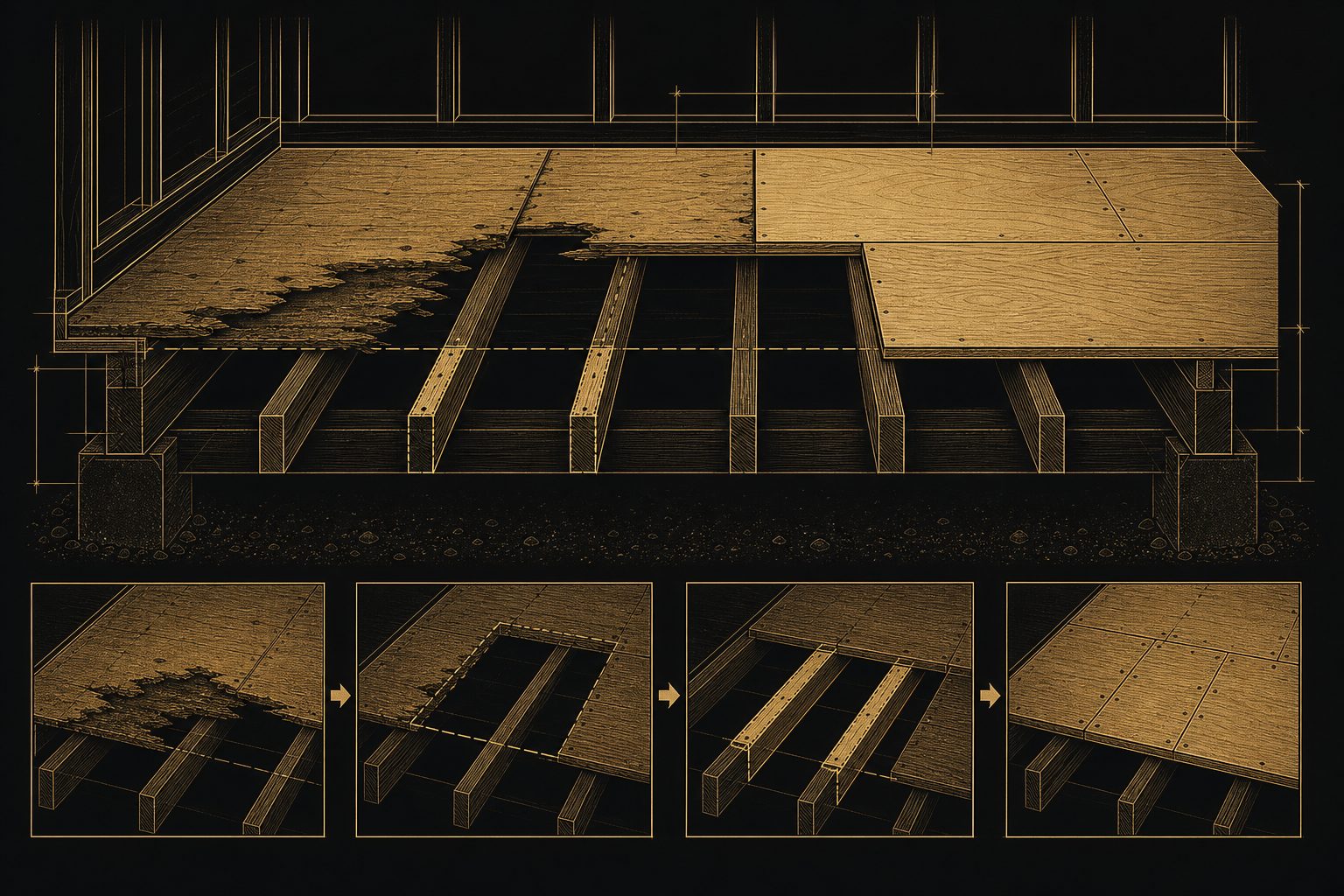
We pull back flooring and inspect the subfloor and, when needed, the joists below. A moisture meter tells us how far the dampness has traveled — it’s almost always wider than the visible stain. This is where we determine whether it’s a patch, a full room, or a structural repair.
3. Dry the area completely
Wet framing and remaining subfloor need to dry to a safe moisture level before rebuilding. In Raleigh’s humidity, this often means fans and a dehumidifier for a day or two. Sealing new plywood over damp joists is how you trap moisture and grow mold.
4. Remove the damaged material
The rotted subfloor is cut out back to solid, dry wood — usually to the center of the nearest joists so the new panel has something to fasten to. If joists are soft, they’re either sistered (a new board bolted alongside) or replaced.
5. Address mold if present
Where moisture has been sitting, mold is common. Affected areas are cleaned and treated, and heavily contaminated material is removed rather than covered up. This protects both the repair and your indoor air.
6. Install new subfloor and refinish
New plywood or OSB is cut to fit, fastened down, and leveled flush with the surrounding floor. From there we reinstall or replace the finished flooring so the repair blends in. If the original flooring can’t be salvaged, this is often a smart moment to consider a fresh flooring installation for the whole room.
Ready to Start Your Project?
Licensed & insured. Transparent pricing. Serving Raleigh, Cary, Apex & all of Wake County.
Call (984) 351-4276 Instant EstimateHow Long Does Subfloor Repair Take?
A small, single-spot repair can often be done in a day. A full bathroom or laundry room, including drying time and reinstalling the finished floor, usually takes two to four days. Structural work involving joists — or a job that turns up mold — runs longer. The drying stage is the part homeowners most often want to rush, and it’s the one worth being patient about, because it’s what makes the repair last.
Does Homeowners Insurance Cover It?
It depends on the cause. Most policies cover sudden and accidental water damage — a pipe that bursts, a supply line that fails overnight. What’s typically not covered is damage from long-term, gradual leaks or lack of maintenance, which is exactly why catching problems early matters financially as well as structurally. If you think a claim may apply, document everything with photos before repairs begin and check with your carrier. We’re happy to provide a written scope of the damage and repair for your records.
Why Wake County Homeowners Call Trident Home Pros
Subfloor repair sits right at the intersection of flooring and structural work, and it rewards a contractor who does both. We’re a local, licensed, and insured team based right here in the Triangle, and we treat these jobs the way we’d want our own home handled — find the real source, dry it properly, and rebuild it to last. You can learn more about our flooring services, see the range of projects we handle across the area on our Raleigh home remodeling page, or browse more homeowner guides on our blog. And whenever you’re ready, the fastest way to get moving is right from our homepage.
Frequently Asked Questions
Can I repair a water-damaged subfloor myself?
A very small, clearly localized spot with no joist involvement is within reach for an experienced DIYer. But most subfloor damage is wider than it looks, and getting the drying, mold treatment, and structural fastening right is where things go wrong. If you’re seeing sagging, joist rot, or any musty smell, it’s worth a professional assessment before you cut into anything.
How much does subfloor water damage repair cost in Raleigh?
Most localized repairs fall between $500 and $3,000, depending on the size of the area and the finished flooring on top. Once floor joists are rotted and need sistering or replacement, costs commonly rise to $3,000–$7,000 or more. An in-person look is the only way to get an accurate number for your home.
How do I know if the damage reached the joists?
Signs include a floor that sags rather than just feeling soft, movement or bounce across a wider area, and visible dark, damp, or crumbling wood when you look from a crawl space or basement. Confirming it usually means pulling back the flooring and inspecting the framing directly.
What happens if I ignore a soft spot in my floor?
It spreads. Moisture wicks into surrounding wood and framing, mold sets in, and a repair that might have cost a few hundred dollars can grow into a structural job costing thousands. In a humid climate like Raleigh’s, small subfloor problems rarely stay small.
Will you fix the leak that caused the damage?
Identifying and stopping the water source is the first step of any repair we do — replacing subfloor without it is a waste of money. For plumbing sources we coordinate the fix; for moisture-related causes like crawl-space humidity or drainage, we address the underlying condition so the repair holds.
Catch Subfloor Damage Before It Spreads
Free estimates. No pressure. Real local pricing from a Wake County contractor.
Call (984) 351-4276 Get Instant EstimateReady to start your project? Call Trident Home Pros today or request an instant estimate online. A soft spot today is a small fix — waiting turns it into a big one.
Trident Home Pros — remodeling done right in Raleigh and Wake County. Browse more guides on our blog.
Leave a Reply