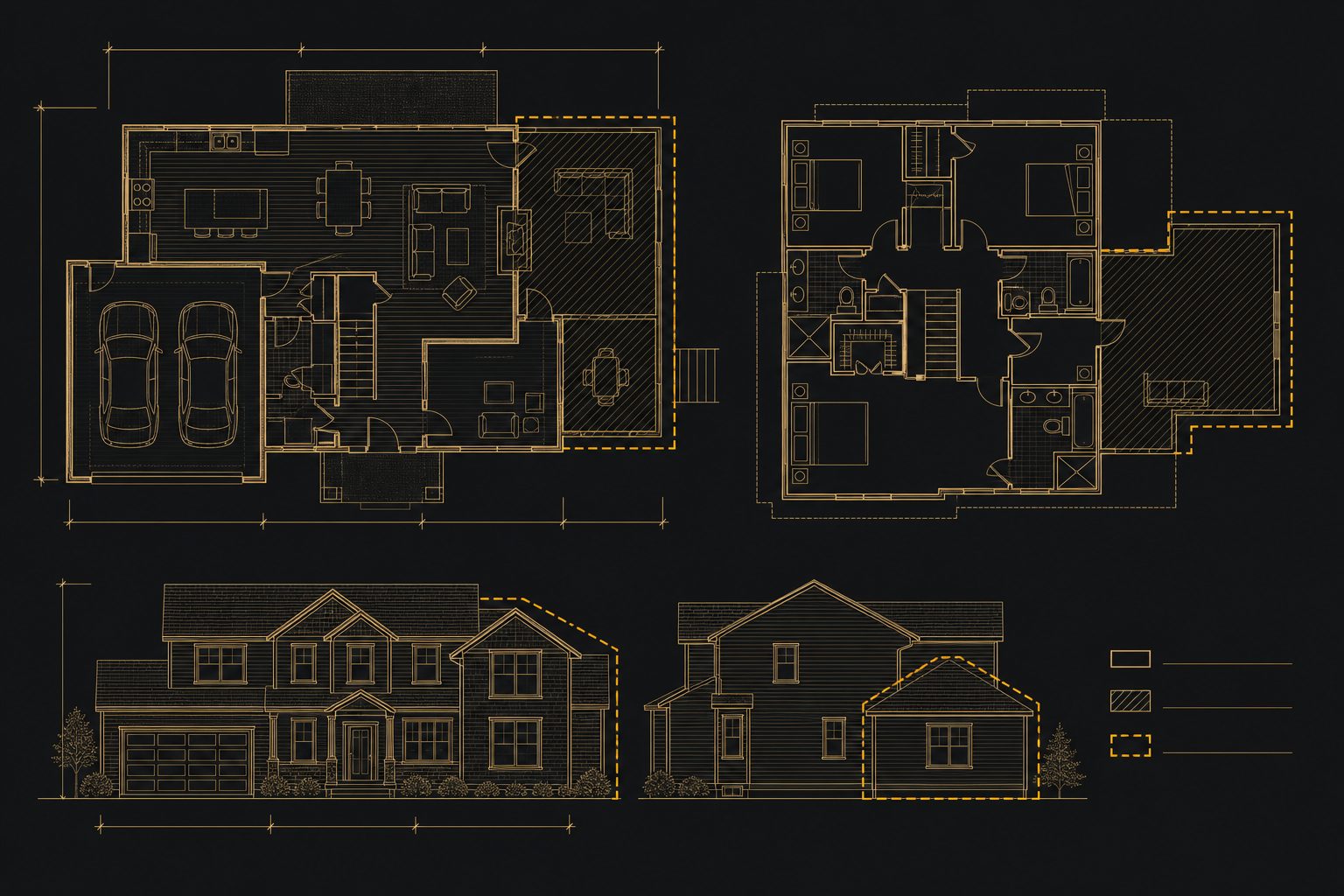

Remodel or move? For a lot of Raleigh homeowners, that question comes down to plain math: the cost of fixing the house you have versus the cost of buying the house you want. When you run the numbers for our market — Wake County home prices, current mortgage rates, agent commissions, and moving costs — staying and remodeling often wins by a wider margin than people expect.
Whether you’re feeling cramped in a Five Points bungalow, staring at a dated kitchen in Brier Creek, or wondering if your North Raleigh split-level can ever feel “finished,” this guide walks through the real trade-offs. As a local whole-home remodeling contractor, we help homeowners across Raleigh, Cary, Apex, and Holly Springs make this call every week — and the answer isn’t always “renovate.” Here’s how to think it through.
The Real Cost of Moving in Raleigh (It’s More Than the Price Tag)
When people compare remodeling to moving, they usually compare a renovation quote to a home’s sticker price. That’s not a fair fight. Moving carries a stack of transaction costs that never build a dollar of value into your life — they just vanish at closing.
In the Triangle, a typical move to a larger or nicer home comes with:
- Real estate commissions — often 5–6% of your sale price. On a $500,000 Raleigh home, that’s $25,000–$30,000 alone.
- Closing costs on the new purchase — lender fees, title, and taxes that commonly run 2–4% of the price.
- A higher mortgage rate. If you locked in a low rate a few years ago, trading up today likely means a materially higher rate on a bigger balance.
- Moving, storage, and setup — movers, deposits, new window treatments, and the hundred small things a new house needs.
- The “trade-up premium.” The bigger, updated home you actually want usually costs well more than what you’d net from selling.
Add it up and it’s common to spend $60,000–$100,000+ in pure friction just to relocate across town — before you’ve improved your day-to-day life at all. That number is the honest baseline your remodel should be measured against.
What a Whole-Home Remodel Actually Costs Here
Renovation budgets vary widely, but local homeowners are usually weighing one of three tiers. A targeted project — a kitchen refresh, a primary bath, or opening up a wall — can run in the low-to-mid five figures. A larger reconfiguration that touches several rooms lands in the mid-to-high five figures. A true whole-home renovation or a substantial addition can reach into six figures, especially when you’re changing the footprint.
The key difference from moving: nearly every one of those dollars stays with you. You get the finished space and you build equity in a home you already own and (presumably) like the location of. In a market like Raleigh’s, where location and lot are half the battle, that’s a real advantage — you’re not giving up your commute, your school assignment, or your neighbors.
Remodel vs. Move: A Side-by-Side Look
Here’s how the two paths stack up on the factors Raleigh homeowners tell us matter most.
| Factor | Remodel & Stay | Sell & Move |
|---|---|---|
| Money that builds value | Most of your budget goes into your own home | $60k–$100k+ lost to commissions, closing & moving |
| Your mortgage rate | Keep your existing rate | Reset to today’s rate on a larger balance |
| Location & schools | Keep the neighborhood you chose | Start over — and inventory is tight |
| Timeline | Weeks to a few months, on your schedule | Sell, shop, bid, close — often 3–6+ months |
| Disruption | Live through a project (or phase it) | Full move, packing, and setup |
| The result | The exact layout and finishes you want | Someone else’s choices — often still need updates |
When Remodeling Is the Smart Move
Staying and renovating usually makes the most sense when:
- You love your location. A great lot in Oakwood, a cul-de-sac in Apex, or a walkable spot near a Cary greenway is hard to replace at any price.
- The bones are good. Solid structure, a decent roof, and a sensible footprint mean your money goes toward finishes and layout, not hidden repairs.
- Your problems are fixable. A closed-off kitchen, one too few bathrooms, no primary suite, or a dark, chopped-up floor plan are exactly the things a remodel solves.
- You have a low mortgage rate. Keeping it while improving the home is often the single most valuable financial move on the table.
- You plan to stay a while. The longer your horizon, the more a renovation pays you back in daily enjoyment.
When Moving Might Win Instead
We’d rather tell you the truth than sell you a project you’ll regret. Moving can be the better call when:
- The location itself is the problem. No renovation changes your commute, your school zone, or a busy road out front.
- The lot can’t support your goals. If you need square footage and there’s nowhere to build — small lot, steep grade, tight setbacks — an addition may not be feasible.
- You’d over-improve for the street. Pouring $150k into a home in a modest pocket of the market can push you well past what neighbors will ever support at resale.
- The scope keeps growing. When the “must-fix” list touches foundation, systems, roof, and layout all at once, buying may be cleaner than chasing problems.
A good contractor will walk your home and tell you honestly which camp you’re in — even when the answer is “this one isn’t worth remodeling.” For a look at what a full renovation involves in our area, see our Raleigh home remodeling page.
Ready to Start Your Project?
Licensed & insured. Transparent pricing. Serving Raleigh, Cary, Apex & all of Wake County.
Call (984) 351-4276 Instant EstimateHow to Run Your Own “Raleigh Homeowner’s Math”
You don’t need a spreadsheet degree to make this call. Work through it in four steps:
1. Price the move you’d actually make
Not just any house — the specific upgrade you want. Estimate its price, subtract what you’d net from your sale (after commissions), and factor in the new mortgage rate. That gap is your true cost to move.
2. Get a real remodel estimate
List what would make you happy to stay: the kitchen, another bath, an open living area, a primary suite. A local contractor can turn that wish list into a realistic budget. Try our instant estimate tool to get a ballpark in minutes.
3. Compare the two numbers honestly
If remodeling costs meaningfully less than the friction of moving — and solves your actual problems — staying usually wins. If the gap is small but moving fixes location too, that’s a fair reason to go.
4. Weigh the things money doesn’t capture
Keeping your kids in the same school, staying near family, or protecting a rate you’ll never see again all have real value, even if they don’t show up on an invoice.
Frequently Asked Questions
Is it cheaper to remodel or move in Raleigh?
For most homeowners with a home worth keeping, remodeling is cheaper once you account for the full cost of moving — commissions, closing costs, a higher mortgage rate, and the trade-up premium. Those can total $60,000–$100,000+ before you’ve improved anything. A targeted remodel often costs less and puts nearly every dollar back into your own home.
Will a remodel help if we plan to sell in a few years anyway?
It can, but be strategic. Kitchens, bathrooms, and smart layout changes tend to return the most at resale in Wake County. Avoid over-improving for your street. If a sale is coming soon, focus on the updates buyers reward rather than a full custom renovation.
Can I add square footage to my Raleigh home instead of moving?
Often yes — an addition or bump-out can add the bedroom, bathroom, or great room you need. Feasibility depends on your lot size, setbacks, grade, and Wake County permitting. A contractor visit will tell you quickly whether an addition is realistic for your property.
How long does a whole-home remodel take?
It depends on scope. A single-room project may take a few weeks; a multi-room renovation or addition can run a few months. We can also phase larger projects so you’re not living through everything at once. You’ll get a clear schedule before work begins.
How do I get an accurate estimate to compare against moving?
Start with our online instant estimate for a ballpark, then schedule a walkthrough. Seeing your home lets us give real numbers on your actual layout — the figure you need to weigh honestly against the cost of moving.
Not Sure Whether to Remodel or Move? Let’s Run the Numbers.
Free estimates. No pressure. Real local pricing from a Wake County contractor.
Call (984) 351-4276 Get Instant EstimateTrident Home Pros — remodeling done right in Raleigh and Wake County. Browse more guides on our blog, or start at our homepage.
Leave a Reply